

- Part 1. How to Screenshot on Android with Physical Buttons
- Part 2. How to Take a Scrolling Screenshot on Android
- Part 3. Some Brand-Specific Shortcuts for Screenshots on Android
- Part 4. Updated Methods to Take a Screenshot on Android
- Bonus: Easily Record Video and Take a Screenshot on Android with Your Computer
- Part 5. Troubleshooting: Why Do I Fail to Screenshot on Android
Taking screenshots is one of the most useful features on a smartphone. When you see something important or fun, a screenshot is the fastest way to save or share it. If you just got a new Android phone, you might be wondering how to screenshot on Android.
Android devices work a little differently from other phones, but the steps are simple once you know them. Below, we will show you how to take screenshots on Android and also cover troubleshooting tips if your screenshots fail.
- Part 1. How to Screenshot on Android with Physical Buttons
- Part 2. How to Take a Scrolling Screenshot on Android
- Part 3. Some Brand-Specific Shortcuts for Screenshots on Android
- Part 4. Updated Methods to Take a Screenshot on Android
- Bonus: Easily Record Video and Take a Screenshot on Android with Your Computer
- Part 5. Troubleshooting: Why Do I Fail to Screenshot on Android
Part 1. How to Screenshot on Android with Physical Buttons
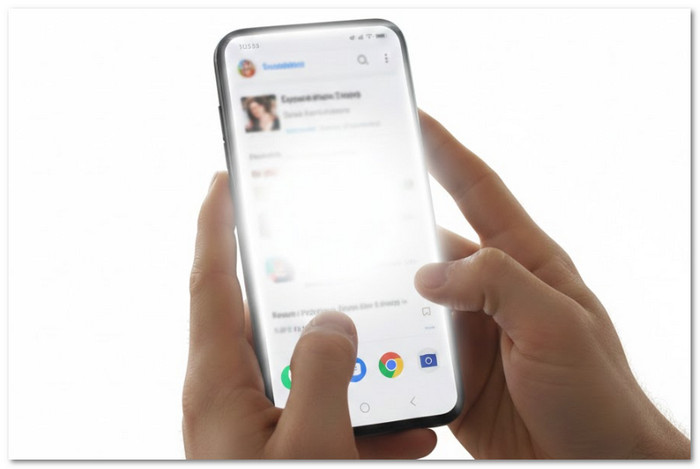
Fortunately, taking a screenshot on Android is easy. Most phones use the same button combo. It works on brands like Samsung, Pixel, OnePlus, and Motorola. Just follow the basic steps below to learn how to screenshot on an Android phone using the device buttons:
Step 1First, open the screen you want to capture. Make sure everything you need is visible before you move on.
Step 2Next, push the Power button and the Volume Down button at the same time. Use one finger for each button.
Step 3Then, release both buttons quickly. Do not hold them too long. If you hold them, the power menu may pop up instead.
Step 4Finally, look for a flash, a short animation, or a shutter sound. It means the screenshot is saved. You can tap the preview at the bottom to edit or share it right away.
Part 2. How to Take a Scrolling Screenshot on Android
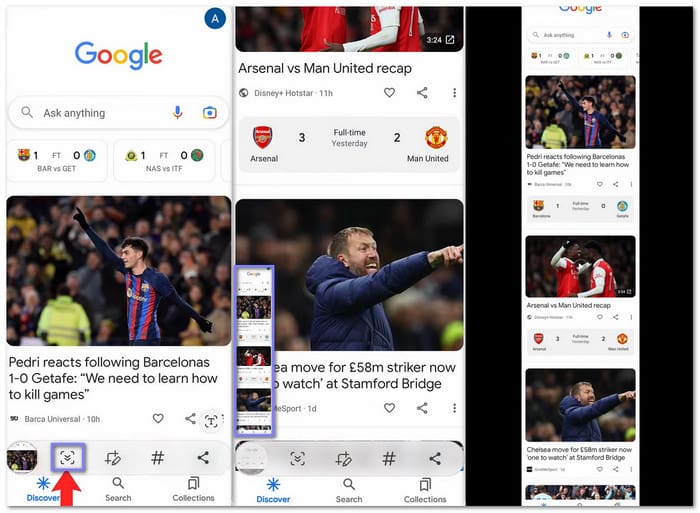
A scrolling screenshot lets you capture more than one screen. It is great for long chats, web pages, or documents. Using a long screenshot on Android makes saving everything in one image simple and fast. The trick is easy. You start with a normal screenshot. Below is how you can do it step by step:
Step 1To begin with, open the page you want to capture. Make sure you are at the top of the content.
Step 2Next, take a normal screenshot by pressing the Power and Volume Down buttons together. A mini preview will appear at the bottom.
Step 3Then, tap the option that says Capture more or press the Scrolling button. On Samsung phones, you will see a button with two arrows pointing down. Tap it again and again to extend the screenshot. On other Android phones, you may drag the screen to choose how much you want to capture.
Step 4Lastly, press Save. After that, open your Gallery or Photos app. Go to the Screenshots folder and check the image. You will see that it is longer than a normal screenshot, which is exactly what a scrolling screenshot Android is designed to do.
Part 3. Some Brand-Specific Shortcuts for Screenshots on Android
Different Android brands add small extra features. The main button method still works for a regular screenshot on Android, but some phones give you faster ways to capture the screen. Here are a few popular ones:
| Brand | Extra Screenshot Shortcut | How It Works |
|---|---|---|
| Samsung Galaxy | Palm swipe | Go to Settings > Advanced features > Motions and gestures. Turn on Palm swipe to capture. Swipe the edge of your hand across the screen. |
| Google Pixel | App switcher screenshot | Tap the Recent Apps button. Then, tap Screenshot under the app preview. |
| OnePlus | Three-finger swipe | Swipe down with three fingers on the screen to capture. |
| Motorola | Three-finger touch | Touch the screen with three fingers at once to take a screenshot. |
| Xiaomi | Three-finger swipe | Swipe down with three fingers to capture the screen. |
These shortcuts are helpful if you do not like pressing buttons. You can turn most of them on or off in Settings.
Part 4. Updated Methods to Take a Screenshot on Android
Android keeps getting better. New updates add smart tools to make Android screenshots easier and safer. If your phone runs newer Android versions like Android 15 or 16, you may notice new features.
First, many phones now support AI tools. After you take a screenshot, you can use the built-in AI to copy text from the image. You can also search what is inside the screenshot. It really saves time.
Second, newer Android versions improve HDR screenshot support. If you capture HDR content, the image can keep better brightness and color detail on supported screens.
Third, Android now includes a feature called Private Space. It lets you hide apps and files behind extra security. Screenshots taken inside Private Space may have limits. It helps protect your private data.
Lastly, you can also use voice assistants. You can say, "Take a screenshot," and your phone will capture the screen. It works well when your hands are busy.
Android keeps adding simple but smart tools. So check your Settings after each update. You may find a faster way to capture your screen.
Bonus: Easily Record Video and Take a Screenshot on Android with Your Computer
Did you know that you can record and take a screenshot at the same time on Android using your computer? Yes, with the use of Tipard Screen Capture, you can do both in one place.
This program lets you record videos and take screenshots while you still use your phone as usual. It offers high resolution and clear definition for every screenshot on your Android. It also lets you record videos in 1080p and even 4K clarity for sharp and smooth results.
With this method, you get better control, better quality, and no more failed screenshots. So, learn how to take a screenshot on Android, as well as record videos using your computer, below:
Step 1Get Tipard Screen Capture on your computer. Click the Download button to get the program immediately. Once installed, open the program to start.
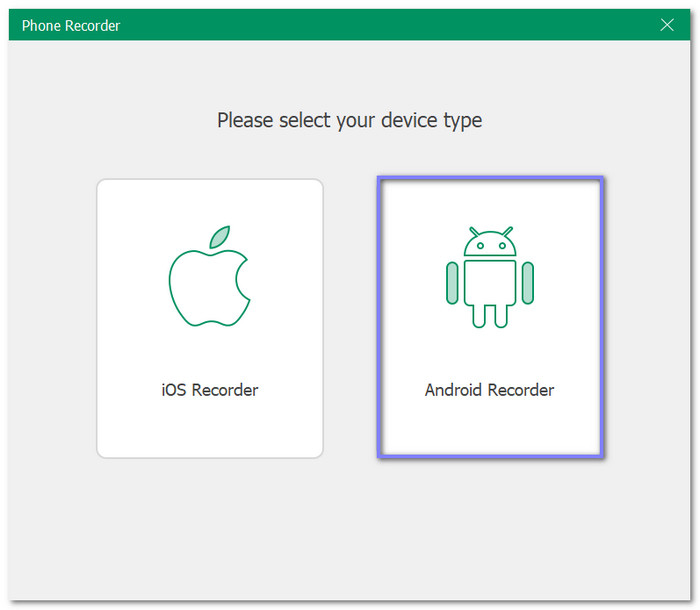
Step 2After launching, click the drop-down menu and select Phone Recorder. When the new interface appears, choose Android Recorder.
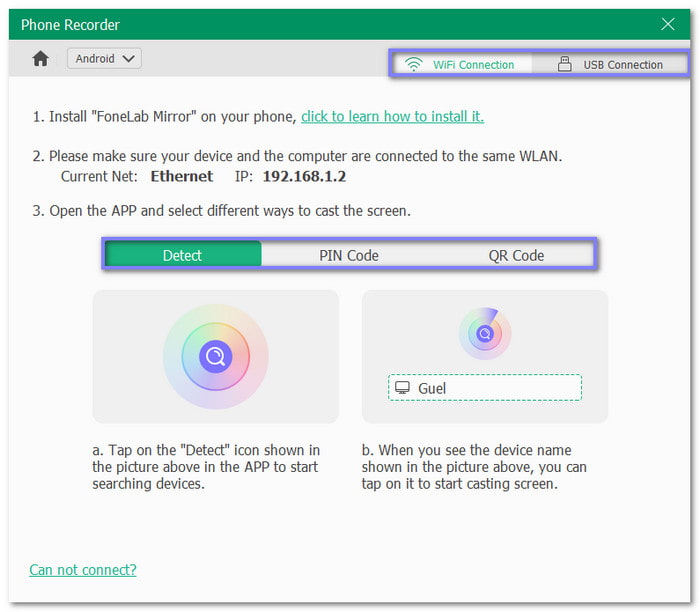
Step 3It is time to connect your Android device. You can use the WiFi Connection or USB Connection. For WiFi, install the FoneLab Mirror app on your phone. Then, link your phone to your computer using Detect, Pin Code, or QR code.
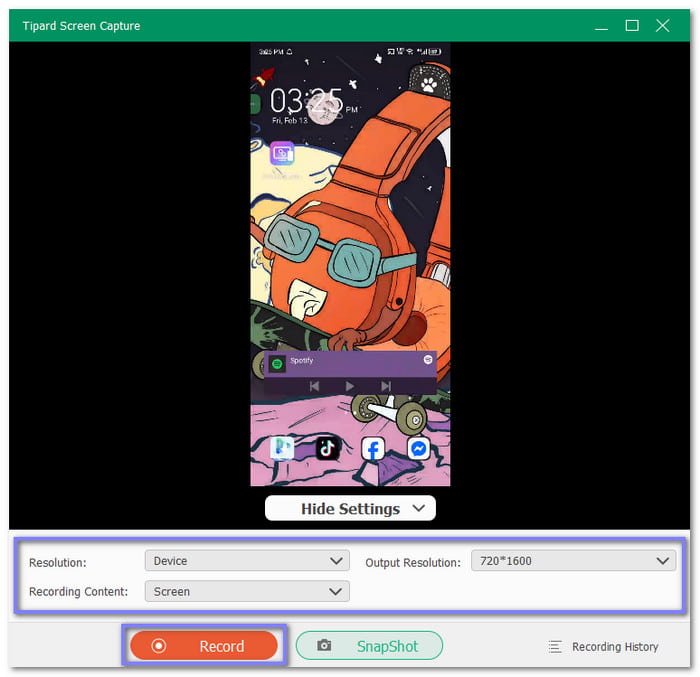
Step 4Once connected, your Android phone screen will appear on the computer. You can adjust the recording resolution and materials to fit your needs. Then, click Record to start recording your Android screen.
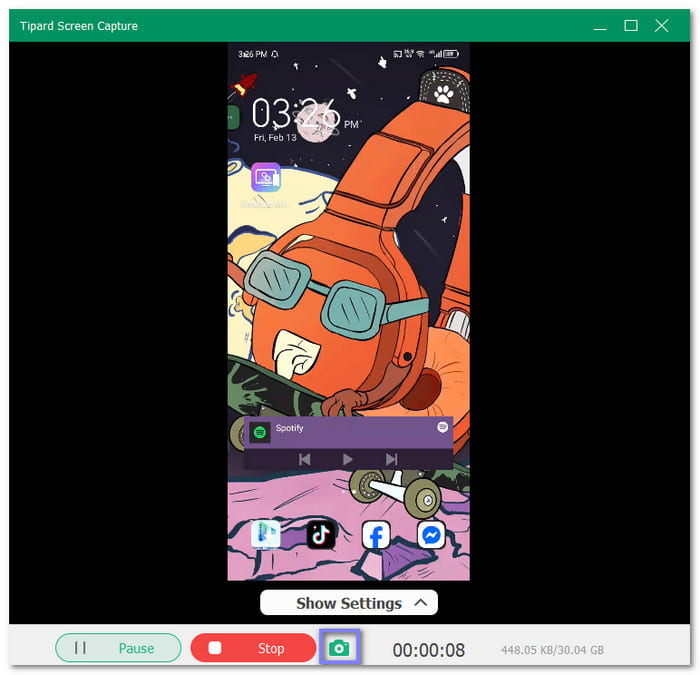
Step 5While recording, you can take many screenshots anytime using the program. The screenshots will be saved automatically for easy access.
Step 6When you finish, click the Stop button. Then, click the Folder button to see all your recorded videos and screenshots.
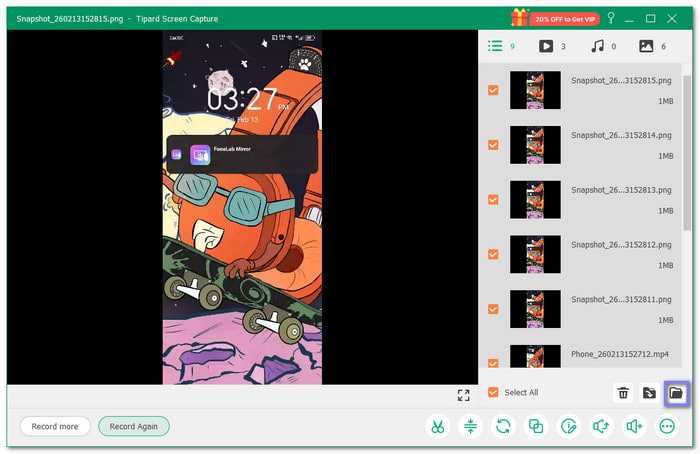
This method is fast, reliable, and lets you manage both videos and screenshots from your computer with ease.
What else it Tipard Screen Capture offer:
- Screen record iPhone, Android, Windows, and Mac.
- Captures full screen, a window, or a custom area.
- Draw, add callouts, insert images, or use whiteboard mode while recording.
- Previews videos immediately after recording.
- Offers simple editing to trim, compress, adjust resolution, or merge files.
Part 5. Troubleshooting: Why Do I Fail to Screenshot on Android
You press the buttons to screenshot on Android, but nothing happens. Or you see a message that says you cannot take a screenshot. Do not worry. This problem is common on Android phones. Let us look at the real reasons and how to fix them.
1. You Pressed the Buttons Too Long
If you hold the Power button too long, the power menu may appear.
Fix: Press Power and Volume Down at the same time. Then, release them quickly. Do not keep holding them.
2. The App Blocks Screenshots
Some apps do not allow screenshots. It often happens in banking apps, private browsing, or streaming apps. You may see a message like "Cannot take a screenshot due to security policy."
Fix: It is normal. The app is protecting your data. You cannot bypass this unless the app allows it.
3. Storage Is Full
If your phone storage is full, the screenshot cannot be saved.
Fix: Delete old photos, videos, or apps. After freeing space, try again.
4. Buttons Are Not Working
If one button is broken or stuck, the screenshot will fail.
Fix: Try using gesture controls like a three-finger swipe if your phone supports it. You can also use your voice assistant and say, "Take a screenshot."
5. Software Glitch
Your phone may freeze or have a small bug.
Fix: Restart your phone. It solves many small problems. If it still fails, check for a system update in Settings.
6. Restricted Profile or Private Space
If you are using a work profile or Private Space, screenshots may be limited.
Fix: Switch back to your main profile and try again.
Conclusion
You already know how to take a screenshot on an Android device; it is simple with the methods we shared.
If you want to record and take screenshots on Android at the same time, you can use Tipard Screen Capture on your computer. It runs on both Windows and Mac, so you can save high-quality images and videos easily. It makes capturing your Android screen fast, clear, and stress-free.
More Reading

About the Author


 Tipard Screen Capture