

FFmpeg is a known program for handling video and audio files. Are you aware that it can also help you join several clips into one video? If you are comfortable with command lines, FFmpeg's merge video is worth learning. You can explore different ways to combine your clips in this write-up. There is also an easier option if commands feel hard.

Part 1. What Matters When You Merge Videos in FFmpeg
Before you use FFmpeg to merge videos, check a few basic things first. These settings can affect how well your files join together.
1. Resolution: The size of the video is its resolution. For every clip, try to use the same resolution.
2. Codec: The codec controls how the video is encoded. Matching codecs work best with stream copy.
3. Frame Rate: Frame rate tells you how many frames play each second. Matching frame rates can help avoid playback issues.
4. Bitrate: Bitrate affects video quality and file size. It does not always need to match. Still, it is useful to check before merging.
5. Format: MP4 is a common video format. The format alone is not enough. The codec and other settings also matter.
6. Audio: Check the audio in each video, too. Different audio settings may require re-encoding.
Part 2. Different Ways to Merge Videos in FFmpeg
FFmpeg has different ways to merge videos. The best method depends on your video files. You can merge them without re-encoding when their settings match. You can also re-encode them when needed.
Method 1: How to Merge Videos Using the Concat Demuxer
The concat demuxer is a simple way to combine videos with FFmpeg. It works best when the videos have matching settings.
• How to Create the Video List
First, create a file named input.txt. Add your videos in the order you want them to play.
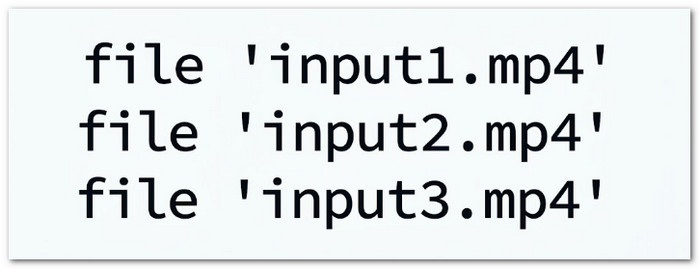
You can use relative or full file paths. Keep the video names correct.
• How to Merge Videos Without Re-encoding
If the videos have the same codecs, resolution, and frame rate, you can use stream copy. This is faster because FFmpeg does not encode the videos again.
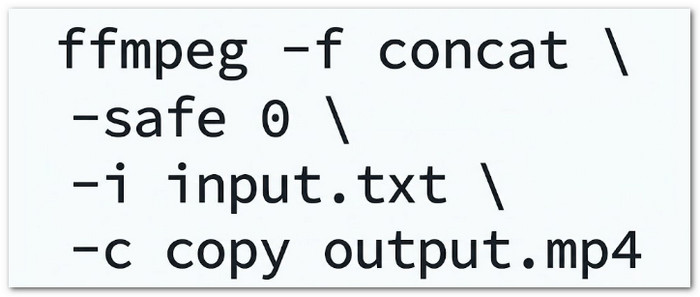
The -f concat option uses the concat format. The -safe 0 option allows the listed file paths. The -i input.txt option loads your video list. The -c copy option copies the streams without re-encoding.
• How to Merge Videos With Transcoding
If you need to re-encode the videos, use H.264 for video and AAC for audio.
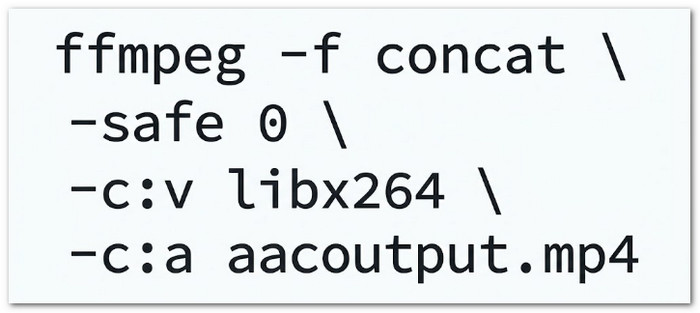
The libx264 option uses the H.264 encoder. The AAC option uses the AAC audio encoder. You can also add other FFmpeg encoding options if needed.
Method 2: How to Merge Videos Using the Concat Filter
The concat filter is beneficial when you need to join videos with FFmpeg that require re-encoding. It can also help when the input files have different codecs or formats.
• How to Add the Video Files
Add each video with the -i option.
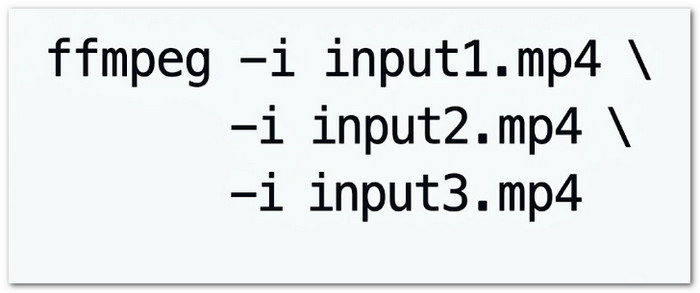
Each -i tells FFmpeg to load another video.
• How to Join the Videos and Audio
Use -filter_complex to join the video and audio streams.
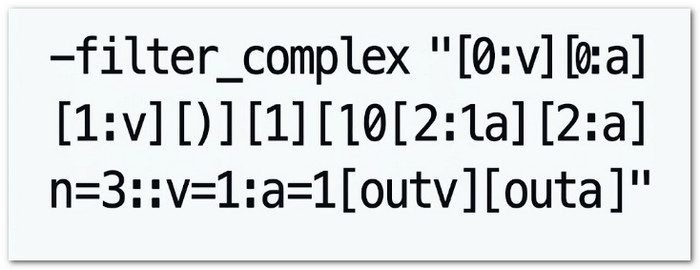
Here, n=3 means three videos are being joined. The v=1 option creates one video stream. The a=1 option creates one audio stream.
The [outv] and [outa] labels represent the final video and audio.
• How to Create the Final Video
Use -map to select the final streams. Then, set the output file name.
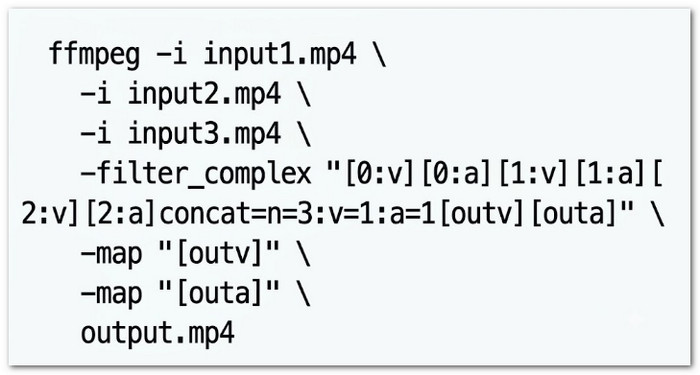
FFmpeg will join the videos and create output.mp4.
Part 3. Tips for Successful Video Merging in FFmpeg
A few fast checks can help you avoid problems when using FFmpeg to combine audio and video. You can achieve a smoother outcome by using these simple tips.
1. Check Your Video Settings
First, check the frame rate, resolution, and codec. When using stream copy, matching settings are crucial.
2. Check the Audio
Make sure the audio tracks are set up correctly. If the videos have different audio setups, the concat filter may be a better choice.
3. Fix Different Resolutions
Do the videos have different sizes? You can scale them to the same resolution before merging.
For example, this command changes both videos to 1280×720:
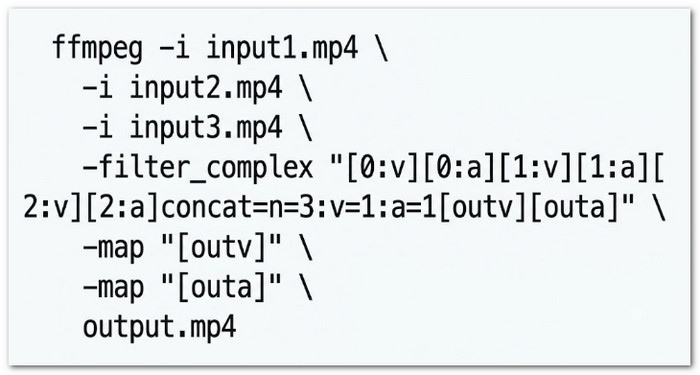
The scale=1280:720 part gives both videos the same size. The concat filter then joins them into one video.
4. Check the Finished Video
Play the final file after merging. Check the picture and sound. Make sure the clips play in the right order. Also, check that the audio stays in sync.
Part 4. The Easiest FFmpeg Alternative to Merge Videos
FFmpeg's merge videos is powerful, but its commands can be tricky for beginners. One small mistake can lead to errors or an unwanted result.
Want an easier way? Tipard Video Converter Ultimate makes video merging simple and smooth. You can merge videos without complex commands and save time. You can join the clips seamlessly.
It supports different formats, resolutions, and bitrates without complex settings. You can also choose one output profile for all your clips. It is to help you create a clean and well-matched final video.
You have learned how to combine videos with FFmpeg commands. Now, it is time to discover an easier way to merge your videos.
Step 1 Click the Download button below to have Tipard Video Converter Ultimate on your computer. Once the download is done, install it by following the on-screen installation guide.
Step 2 Look at the main interface. Open the More Tools tab. Then, select Video Merger.
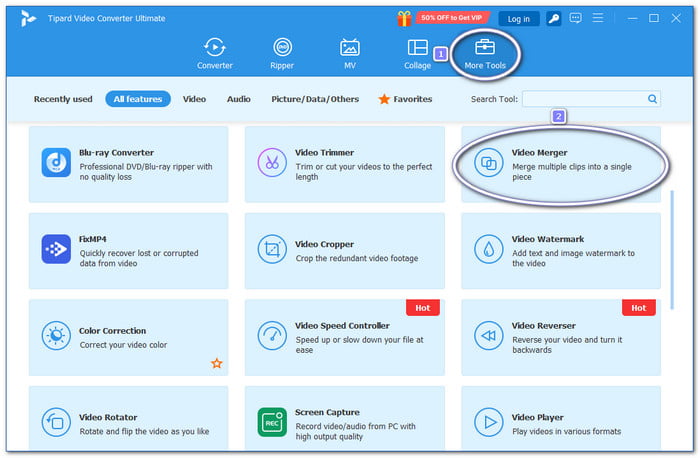
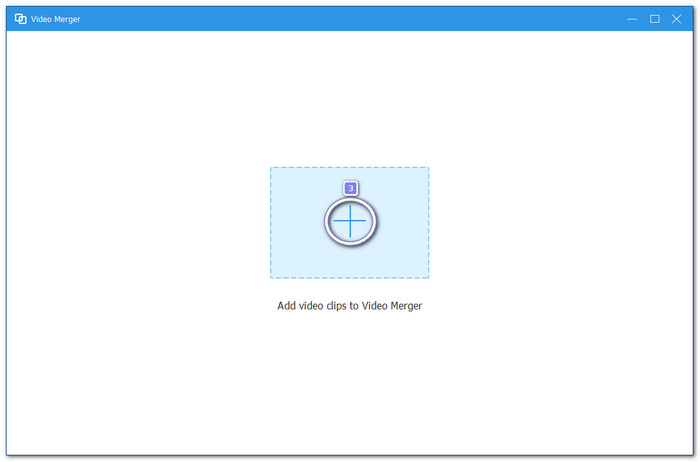
Step 3 Click the Add button to add your videos. You can add several clips at once. Tipard Video Converter Ultimate will place them in the merger window for you.
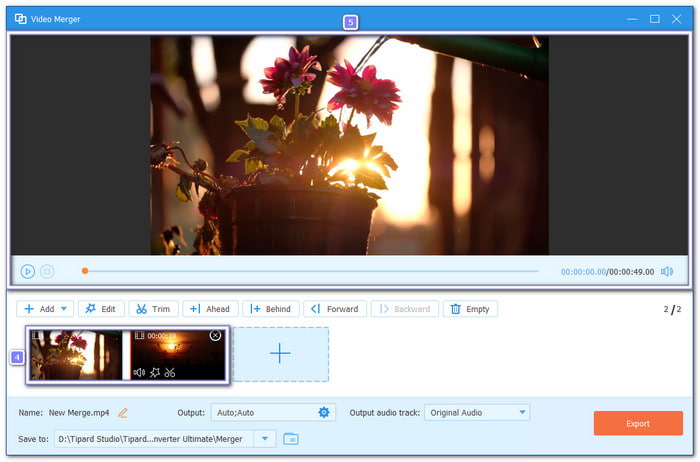
Step 4 Check the order of your clips. If a video is in the wrong place, drag it to a new position. Then, head to the preview screen to check how the clips will play together.
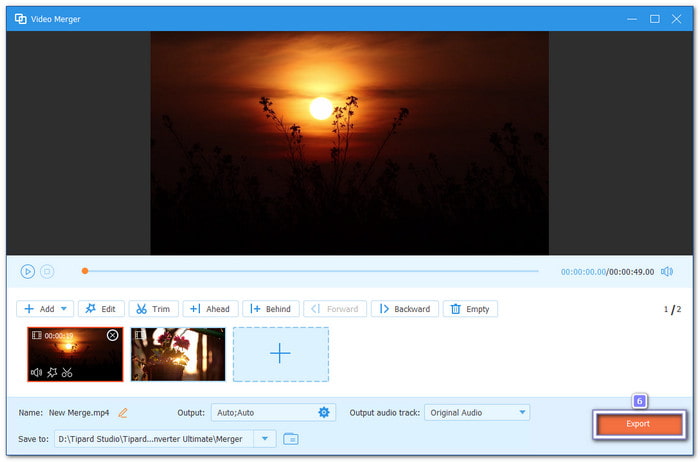
Step 5 If you are happy with the result, click the Export button at the bottom-right corner. Tipard Video Converter Ultimate will then merge the clips into one video.
Why We Select It
It can merge many videos with ease. You can also edit each clip before merging. Crop video, rotate, apply filters, or remove unwanted parts. These tools help remove awkward clips and make the final video flow better.
Part 5. FAQs of FFmpeg Merging Videos
Can I trim a video with FFmpeg?
Yes. You can use FFmpeg to trim videos in several ways. You can cut a video by time or duration. You can also remove the end of a clip. Re-encoding is another option when you need more control.
Does merging videos with FFmpeg reduce quality?
No. The -c copy option moves the video and audio streams as they are. It does not encode them again, so the original quality stays the same. The concat filter works in a different way. It normally encodes the videos again, which may lower the video quality.
Can FFmpeg add transitions between merged videos?
Yes. FFmpeg can add transitions with filters such as xfade. However, the setup can be complex.
Conclusion
We understand that combining two videos with FFmpeg is hard. It is better suited for users who are comfortable with command lines. That is why Tipard Video Converter Ultimate is a much easier choice. Just a few clicks, and it can merge your clips into one smooth video. No complex commands. No confusing steps. Just add, arrange, and export.

All-in-one video toolbox: convert, edit, upscale, enhance, and compress your videos easily
100% Clean & Safe
100% Clean & Safe

More Reading




About the Author


 Tipard Video Converter Ultimate